

- Concrete beats abstract Toddlers can't picture a future baby, but they understand photos of themselves right now.
- Make them the hero Photos that frame your toddler as the helper, not the replaced one, lower jealousy before it starts.
- Start with free methods Old newborn photos, sonogram shots, and routine photos cost nothing and work immediately.
- A coloring book adds staying power Turning those same photos into pages your toddler colors gives the lesson somewhere to live for weeks, not minutes.

Toddlers can't picture "a baby is coming in three months." That sentence means nothing to a two-year-old's brain. But show them a photo? Now you've got something real.
Here are 7 photo-based ideas that actually help toddlers process the change, ranked from simple things you can shoot on your phone tonight to a keepsake project worth setting up before the baby arrives.
Why Visuals and Personal Storybooks Help Toddlers Transition to Big Siblings
Toddlers think in pictures, not abstractions, so photos of themselves as a baby or "practicing" big sibling tasks give them a concrete story they can hold onto instead of a scary unknown. Putting the toddler at the center of that story — as the hero, not the sidelined one — lowers the fear of being replaced.
Ask a three-year-old what "sibling" means and you'll get a blank stare. Ask them to point to themselves in a photo, and they light right up. That's the whole trick here.
Child development researchers have long noted that kids under four rely heavily on concrete, observable cues rather than verbal explanation to understand upcoming change — a concept explored in early research on object permanence and concrete reasoning in early childhood. A toddler doesn't need a lecture about becoming a big sibling. They need to see it, touch it, and — ideally — color it in themselves.
This is where personal storybooks and custom photo art earn their keep. A flat conversation ("you're going to be a big sister!") becomes an interactive, repeatable experience when it's built from real photos of your actual kid, in your actual home, doing things they recognize.
That repeatable part matters more than people realize.
1. The "When You Were Small" Photo Flashback
Pull out photos from your toddler's own newborn days and look through them together — this helps them understand what babies actually look like, sound like, and need, which demystifies the new arrival.
Most toddlers have never really seen a newborn up close. They picture a baby as basically a smaller toddler — someone who can maybe walk a little slower. So when the real baby shows up floppy, wrinkly, and screaming every two hours, it can be a genuine shock.
Sit down with 5-6 photos from their first weeks. Point out the tiny hands, the sleepy eyes, the swaddle blanket. Say things like, "You couldn't hold your own head up yet — Daddy had to support it like this." Then land the reassurance: "We took care of you just like this, every single day, and we loved doing it." This is the part that sticks. Toddlers who hear "you were loved exactly this much" tend to approach the new baby with more curiosity than dread, according to pediatric guidance from the American Academy of Pediatrics on sibling preparation.
Keep the photos out — a small printed stack on the fridge or a phone album they can flip through works fine. No app, no cost, no setup. Just five minutes and old pictures you already have.
2. The "Super Helper" Practice Photos
Photograph your toddler practicing big-kid jobs — carrying a diaper, holding a baby doll, pushing an empty stroller — then frame those pictures as proof they're already good at this. The goal is confidence, not chores.
Toddlers love a job title. "You're my Diaper Delivery Helper" lands a lot better than "you have to share now." Snap a few candid shots over a week: her handing you a wipe, him gently patting a stuffed animal "like a baby," either of them pushing the empty stroller around the living room.
Print two or three of the best ones and stick them somewhere visible — the bedroom door, the fridge. Every time your toddler walks by, they see themselves succeeding at the new role before the role even starts. That's a small, free confidence loop that costs you nothing but a few phone photos.
3. The Sonogram "First Meeting" Photo
Take a photo of your toddler holding the sonogram printout next to your belly — this gives them a tangible object to connect to an otherwise invisible baby.
A pregnant belly is confusing to a toddler. There's no baby to see, no baby to touch, just a bump and a lot of grown-up talk. The sonogram photo bridges that gap. Let them hold the printed image, point to the little shape on it, and ask, "Is that the baby?"
Answer their questions honestly and simply — "yes, that's your brother, he's growing right there" — and take a photo of them holding it against your bump. That single image becomes a touchstone you can bring back out anytime they ask "where's the baby" over the following months.
4. The Custom "Big Brother/Sister" Coloring Book

Turning real photos of your toddler into custom coloring pages gives them a screen-free way to sit with their new role, color themselves as the big sibling, and process the change at their own pace. If you want a gift that gets used for weeks instead of minutes, this is worth setting up before delivery day.
The three photo ideas above — the newborn flashback, the "super helper" shots, the sonogram photo — all work great on their own. But there's something different that happens when those same images turn into pages your toddler can color with their own hands. That's the gap a printed photo can't quite close.
A custom coloring book made from your own photos does exactly that. Memory Doodle turns your favorite candid shots — the messy ones, the real ones — into hand-drawn-style line art your toddler can color in, over and over, during quiet time, waiting rooms, or hospital visits while you're recovering.
Not every photo converts equally well. Close-up faces with good lighting turn out best; group shots from far away tend to lose detail. That's a real limitation worth knowing before you upload twenty blurry action shots.
Bring this bridge sentence to life: a new baby is a lot of change to hold in a small brain. A book with your toddler's own face in it, in a role they already feel proud of, gives them something to come back to as many times as they need.
Before you order
You need about five photos, not fifty.
Close-up faces with decent light turn out best. They do not need to be recent, and they do not need to be good. A screenshot from the family group chat works fine.
Nothing is a surprise.
You see what each photo became before you pay for anything, so a photo that did not work is something you find out now rather than when the book arrives.
Allow five to seven business days.
Each book is made to order, then printed and bound. Worth knowing if you are shopping close to a birthday.
$24.95 for the first book, $10 for each one after.
Flat $5.95 shipping on any order, however many books are in it.
Don't wait until the baby is already home to introduce the coloring book. Give it to your toddler 2-3 weeks before the due date so they've already bonded with their 'big sibling' pages by the time the baby actually arrives — that familiarity is what makes it a comfort object during the hospital stay, not a random new toy competing for attention.
5. The "Our Routine" Visual Storyboard

Photograph the key pieces of your toddler's daily routine — bedtime story, park visit, snack time — and use those images to show them that their special moments with you aren't going anywhere.
Toddlers don't fear the baby itself so much as they fear losing you. That's the real anxiety hiding under most sibling meltdowns. So instead of only talking about what's changing, show them what's staying the same.
Take photos of the exact bedtime routine, the exact park bench, the exact snack-time chair. Line them up in order and walk through it: "After the baby comes, we still do storytime. We still go to the park. Daddy still does snack time with you." Repetition here does the heavy lifting — say it more than once, across more than one day.
6. The "Special One-on-One Time" Memories
Take photos of dedicated one-on-one moments between each parent and the toddler in the weeks before delivery, then keep those images visible as proof they're uniquely loved.
Every kid needs to hear, without ambiguity, that they matter separately from their sibling role. A quiet afternoon of just Mom and toddler, or a Saturday morning of just Dad and toddler — photograph it. Frame it small, or slip it into a keepsake book they can flip through during the hospital stay when routines get shaken up anyway.
These photos become an anchor during the first few disorienting days after baby comes home.
7. The "Welcome Home Baby" Preview Book
Set up a simple photo sequence showing what bringing the baby home will actually look like — car seat, nursery corner, crib — so your toddler has a step-by-step mental walkthrough before delivery day.
Uncertainty is the real enemy here, not the baby. Photograph the car seat in the car, the empty crib in the nursery, the spot where they'll first meet the baby at the hospital or at home. Walk your toddler through the sequence a few times: "First we'll drive home, then you'll meet baby right here, then baby sleeps in this crib." A predictable script — even a short one — takes a lot of the scare out of delivery day.
That's it — no expensive materials required for any of it.
Here's how these seven approaches actually stack up if you're deciding where to spend your time first.
| Feature | Photo Flashback (Free) | Routine Storyboard (Free) | Memory Doodle Coloring Book |
|---|---|---|---|
| Cost | Free — photos you already have | Free — a few printed photos | Paid, one-time |
| Setup time | 5 minutes | 20-30 minutes to photograph and print | A few minutes to upload photos online |
| Reusability over weeks | Low — kids look, then move on | Medium — good for repeat conversations | High — kids color the same pages repeatedly |
| Screen-free during hospital stay | Yes, if printed | Yes, if printed | Yes — designed for exactly this |
| Gives toddler an active role (not just looking) | No — passive viewing | No — passive viewing | Yes — coloring is hands-on |
- Turns your own candid photos into a keepsake your toddler actually recognizes
- Gives toddlers a hands-on activity during hospital visits and quiet time
- Printed on heavy, lay-flat paper that holds up to years of use
- Comes with digital codes to gift free pages to grandparents or other family
- Close-up, well-lit photos convert best — blurry or far-away group shots lose detail
- Takes a few days to produce, so it's not a same-day fix if the baby is arriving this week
Frequently Asked Questions About Preparing Toddlers for a New Baby
Building Lasting Connections Before Day One
Skip the posed, everyone-smiling-at-the-camera photos for this project. The candid ones — mid-tantrum, mid-giggle, mid-diaper-delivery — are the ones your toddler will actually recognize themselves in, and recognition is the whole point.
If you want to see how other parents have handled the big-sibling transition, this piece on gifts for a brand-new big brother has a few more ideas worth stealing. And if you're weighing options beyond a coloring book, 7 meaningful gifts that build family connection rounds up a few more keepsake-style picks.
One thing most parents don't think of: take a "before" photo of your toddler alone in the nursery, sitting in the spot where they'll later meet their sibling for the first time. Compare it to the "after" photo a week later. That pair, side by side, tends to become the one photo grandparents ask to see again and again.
Ready to give your toddler a keepsake that helps them feel like the hero of this story?
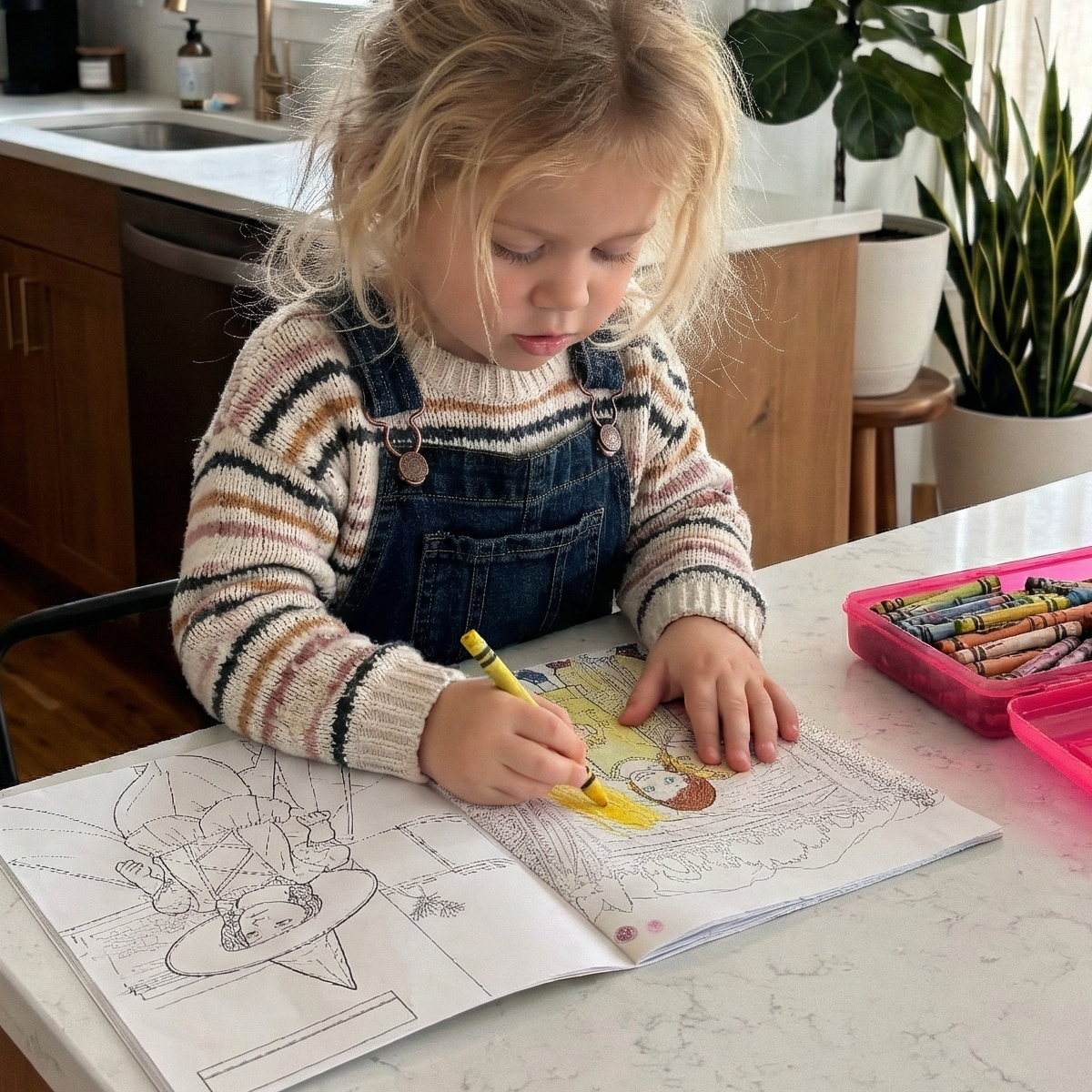
Memory Doodle is a premium storytelling service that transforms your favorite family snapshots into beautiful, custom-bound coloring books....
- Instant Peace: Enjoy 30–60 minutes of quiet, screen-free focus while your child explores their creativity.
- The "Look, It’s Me!" Moment: Boost your child’s confidence by making them the hero of their very own book.
- Meaningful Gifting: Easily share the joy with your inner circle using our simple digital gift codes.