

- Start with zero friction Custom photo coloring books are the easiest entry point — no new skills, no expensive supplies, just your photos and a set of pencils.
- Your hands are the key Every hobby on this list works because busy hands cannot reach for a phone — the physical engagement is the whole point.
- Calm comes from connection The most restorative hobbies are the ones tied to real meaning — coloring your own memories, baking bread for your family, growing something you eat.
- Setup determines success The hobby you'll actually do is the one already set up and waiting — put it somewhere visible before tonight.

The average American woman checks her phone 96 times a day — roughly once every 10 minutes. And almost none of those checks leave her feeling better. Here are 9 hobbies that actually compete with the scroll, ranked from lowest friction to most involved.
1. Custom Photo Coloring Books: The Lowest-Friction Entry Point
Adult coloring is one of the most well-documented ways to quiet an anxious mind — it occupies the restless hands that reach for phones while anchoring your attention to something simple and satisfying. The upgrade from generic mandalas to photo-based coloring books is the difference between calming and genuinely restorative: when you're coloring your own memories, something shifts.
Here's what usually happens. You buy a coloring book from the dollar section, color two pages, then leave it on the coffee table where it collects dust. The problem isn't the coloring — it's the lack of connection to the image. A mandala is beautiful, but it means nothing to you personally.
A coloring book made from your own family photos is a completely different experience.
When you color a page that used to be a photo of your daughter's third birthday — flour on her nose, gap-toothed grin, arms out for a hug — you don't just fill in the lines. You remember. You slow down. Some customers report spending 45 minutes on a single page without once thinking about their phone.
That's the kind of calm that's hard to find anywhere else.
If you want something you'll actually come back to night after night, here's what makes the difference between a coloring book you shelve and one you finish:
Memory Doodle Custom Coloring Book
"Colored pencils or fine-tip markers"
Learn More →The best part? You don't need any special skills. No learning curve. Just your photos, a set of colored pencils, and fifteen minutes you would've otherwise spent scrolling. For a deeper look at what separates DIY coloring book apps from a professional service, this comparison breaks it down clearly.
One honest note: Memory Doodle takes 5–7 business days to ship, so it's not a same-day solution. Order it when you feel the urge to start something new — not the night before you need a gift.
2. Hand Embroidery: Slow Stitching for Fast Minds

Hand embroidery works because the repetitive motion of pulling thread through fabric is genuinely soothing to the nervous system — it's a form of rhythmic movement that research at the University of Otago has linked to reduced anxiety and improved mood. You need almost nothing to start: a hoop, some fabric, embroidery floss, and a pattern you like.
The focus required is the exact right amount. Not so much that it stresses you out. Just enough to crowd out the noise.
Modern embroidery patterns have come a long way from cross-stitched kitchen aphorisms. Botanical prints, abstract geometric designs, funny pop culture references — there's a whole world of kits aimed at women who want something fresh and contemporary. Brands like contemporary embroidery kit makers on Etsy offer beginner-friendly options with pre-printed fabric and pre-sorted thread, so you spend zero time puzzling over supplies.
A good starter project takes about 3–4 evenings of 30-minute sessions. That's a finished piece on your wall — something you made with your hands — in under a week.
The mistake most women make when starting a new calming hobby is treating it like a productivity goal — setting aside a full hour and then feeling like they failed when life interrupted. Try 'bookmarking' instead: keep your coloring book or embroidery hoop open on the table, not put away. Studies on habit formation show that visible cues increase follow-through by up to 40%. If it's already out, you'll pick it up for 10 minutes between tasks — and those 10-minute sessions add up faster than any planned hour.
3. Journaling with Prompts: Writing That Actually Quiets the Mind
Freeform journaling can feel overwhelming if you stare at a blank page and wait for inspiration. Structured prompts work better for stress relief because they give your brain a specific direction — you spend energy on the thought, not on figuring out what to think about. Even five minutes of prompt-based writing has been shown to reduce cortisol levels, according to research published in the journal Psychosomatic Medicine.
The pen-to-paper connection genuinely slows things down. You can't type as fast as you think, which forces your thoughts to queue up and process one at a time. It's the opposite of a Twitter feed.
Some prompts worth trying tonight:
- What's one thing that went better than expected today?
- If tomorrow had no obligations, what would you do first?
- What's something you're quietly proud of that no one else noticed?
You don't have to be a writer. You just have to be someone with thoughts — and you already are.
Journals like the Five Minute Journal or Moleskine's wellness notebooks come with built-in prompts, so the blank page problem is already solved. They're widely available and cost $20–$30. Genuinely useful, no product required.
4. Baking Bread: The Ultimate Hands-On Mindfulness Practice
Bread baking forces presence the way few activities can — you literally cannot knead dough while holding your phone. The sensory engagement is total: the resistance of the dough under your palms, the yeasty warmth rising from the bowl, the sound of a hollow knock on a finished loaf. Every stage demands you be exactly where you are.
No-knead bread is the ideal starting point. You mix flour, salt, yeast, and water the night before, leave it covered on the counter, and bake it the next morning. The New York Times' Jim Lahey recipe — which requires zero special equipment and about 10 minutes of active effort — produces a bakery-quality loaf that will make you feel unreasonably competent.
The waiting is actually the point. Dough rises on its own schedule. You can't rush it. In a culture built around instant everything, that forced patience turns out to be strangely relieving.
And when it comes out of the oven? That smell alone is worth it. Bread baking is one of those hobbies where the reward cycle is so immediate and so sensory that you genuinely forget what you were anxious about.
5. Watercolor Painting: Embracing Imperfection as Therapy
Watercolor is uniquely calming because control is beside the point — the pigment blooms where it wants, wet edges bloom into each other, and the "mistakes" are often the most beautiful parts. This surrender to unpredictability is, for many women, the most therapeutic part of the whole practice.
You don't need to know how to draw. Abstract washes, loose botanicals, sky gradients — these all work with beginner supplies and no prior skill. A $15 Arteza watercolor set and a pad of cold-press paper is all you need to start.
The wet-on-wet technique is the most forgiving for beginners: wet your paper first, then drop pigment in, and watch it spread on its own. The result always looks intentional, even when it wasn't. That's the magic.
Here's how these analog hobbies compare against each other and against the default option — reaching for your phone:
| Feature | Custom Photo Coloring | Scrolling Social Media | Generic Coloring Book | Knitting |
|---|---|---|---|---|
| Time to start | 5 minutes (book in hand) | Instant | 5 minutes | 20–30 min setup for beginners |
| Feeling after 30 minutes | Calm, present, accomplished | Drained, restless, behind | Mildly relaxed | Calm and productive |
| Keeps hands off phone | Yes — fully | No — IS the phone | Yes — mostly | Yes — fully |
| Personal emotional connection | High — your own memories | Low — other people's lives | Low — generic images | Medium — your own creation |
| Cost to start | $29–$49 per book | Free | $5–$15 | $20–$40 for starter kit |
| Produces a lasting keepsake | Yes — colored pages become heirlooms | No | No | Yes — finished items |
| Skill required | None | None | None | Small learning curve |
6. Indoor Gardening: Growing Things, Not Anxiety
Tending to living things — herbs on a windowsill, a snake plant in the corner, a pot of cherry tomatoes on the porch — creates a calming daily ritual that's almost impossible to rush. Plants don't respond to urgency, and caring for them puts you in a slower, more attentive relationship with time.
If you've killed every plant you've ever owned, start with a pothos or a ZZ plant. These genuinely thrive on neglect. Water them when you remember, give them indirect light, and they'll outlast most of your other commitments. The American Horticultural Therapy Association has documented reduced stress and improved wellbeing in adults who regularly tend plants — even minimal, low-maintenance ones.
Herbs are even better, because they pay you back. A pot of basil on the kitchen counter means fresh pesto whenever you want it. Mint for your tea. Rosemary for your bread (see Hobby #4). The garden becomes part of your daily sensory life rather than a separate, effortful activity.
The satisfaction of watching something thrive because you remembered to water it is modest and real — exactly what calm is supposed to feel like.
7. Puzzle Building: The Focus That Feels Like Meditation
Puzzles occupy the mind at just the right level — demanding enough to quiet intrusive thoughts, but not so difficult that they cause stress. The repetitive searching and clicking-into-place of puzzle pieces triggers small hits of dopamine that feel satisfying without the endless scroll that social media requires.
A 500-piece puzzle is a good starting point for someone who wants genuine calm without a multi-week commitment. 1,000-piece puzzles are better if you want an ongoing project to return to each evening — a reason to sit at the table instead of the couch.
Puzzle imagery matters more than most people realize. Busy, chaotic images (like candy or maps with tiny text) can actually increase frustration. Landscapes, botanicals, and artwork with distinct color zones are far more calming. Brands like Galison and Gibsons make genuinely beautiful puzzles that double as wall art once they're framed — a legitimately nice outcome for a $20 activity.
Puzzles are also one of the few hobbies that work as a social, screen-free activity. Set one up on a side table at a family gathering and watch how quickly people drift over.
8. Knitting or Crochet: Productive Rest with Rhythm
The bilateral, rhythmic motion of knitting — two needles, two hands, one repeating pattern — has measurable effects on the nervous system. A 2013 survey of over 3,500 knitters by the British Journal of Occupational Therapy found that 81% reported feeling calmer after knitting, and over half said it helped them manage anxiety and depression.
Chunky yarn and large needles are the easiest entry point. A basic knit stitch makes a scarf in four or five evenings. The repetition becomes almost automatic after the first hour — your hands know what to do, and your mind floats free.
Modern yarn crafts aren't your grandmother's afghans. Chunky merino blankets, market bags, bralettes, bucket hats — the projects people are making now are genuinely stylish. YouTube channels like Sheep & Stitch and Wool and the Gang offer free beginner tutorials that are clear enough for complete beginners.
The bonus is the finished object. You didn't just pass time — you made something warm.
9. Reading Physical Books: Reclaiming Deep Focus

Reading on paper is fundamentally different from reading on a screen — not because the words are different, but because there are no notifications, no related articles, no invisible pull toward checking something else. A physical book creates a boundary that phones can't penetrate, and sustained reading for 30 minutes has been shown to reduce heart rate and muscle tension to the same degree as yoga, according to research from the University of Sussex.
The genre matters. Choose books for restoration, not self-improvement. A novel pulls you somewhere else entirely. Poetry gives you permission to slow down to a single image. A memoir reminds you that other people's lives are just as messy and just as beautiful as yours. Productivity books and business memoirs, paradoxically, are some of the least calming things you can read before bed.
Create a reading ritual and it becomes easier to protect. A specific chair. A cup of something warm. The phone plugged in across the room. Even 20 minutes of this kind of reading changes the quality of sleep that follows — and the quality of the morning that comes after.
Getting lost in a story is not a waste of time. It's one of the most restorative things a human brain can do.
If you're thinking about how coloring and reading can work together — coloring a Memory Doodle page while a child reads nearby, or gifting a custom coloring book as part of a screen-free gift — this guide on personalized keepsakes that become family heirlooms is worth a read.
And if you want to understand what happens in your brain during adult coloring specifically — the actual science behind why those 15 minutes feel different — this article breaks it down without the jargon.
One last thing worth knowing: the hobbies on this list that tend to stick longest aren't the most elaborate ones. They're the ones that are already set up and waiting. A coloring book on the nightstand. Knitting needles in a basket by the chair. A puzzle on the kitchen table. The less friction between you and the activity, the more likely you are to reach for it instead of your phone.
- Zero learning curve — if you can color, you can do this
- Coloring your own memories keeps you engaged far longer than generic books
- Heavy paper handles any medium without bleed-through
- Creates a finished keepsake, not just a passed hour
- Works as a solo wind-down ritual or a family activity
- Ships in 5–7 business days — not a last-minute solution
- Close-up face photos work best; busy group shots or dark backgrounds convert less cleanly
Ready to turn your family photos into something you'll color, keep, and love?
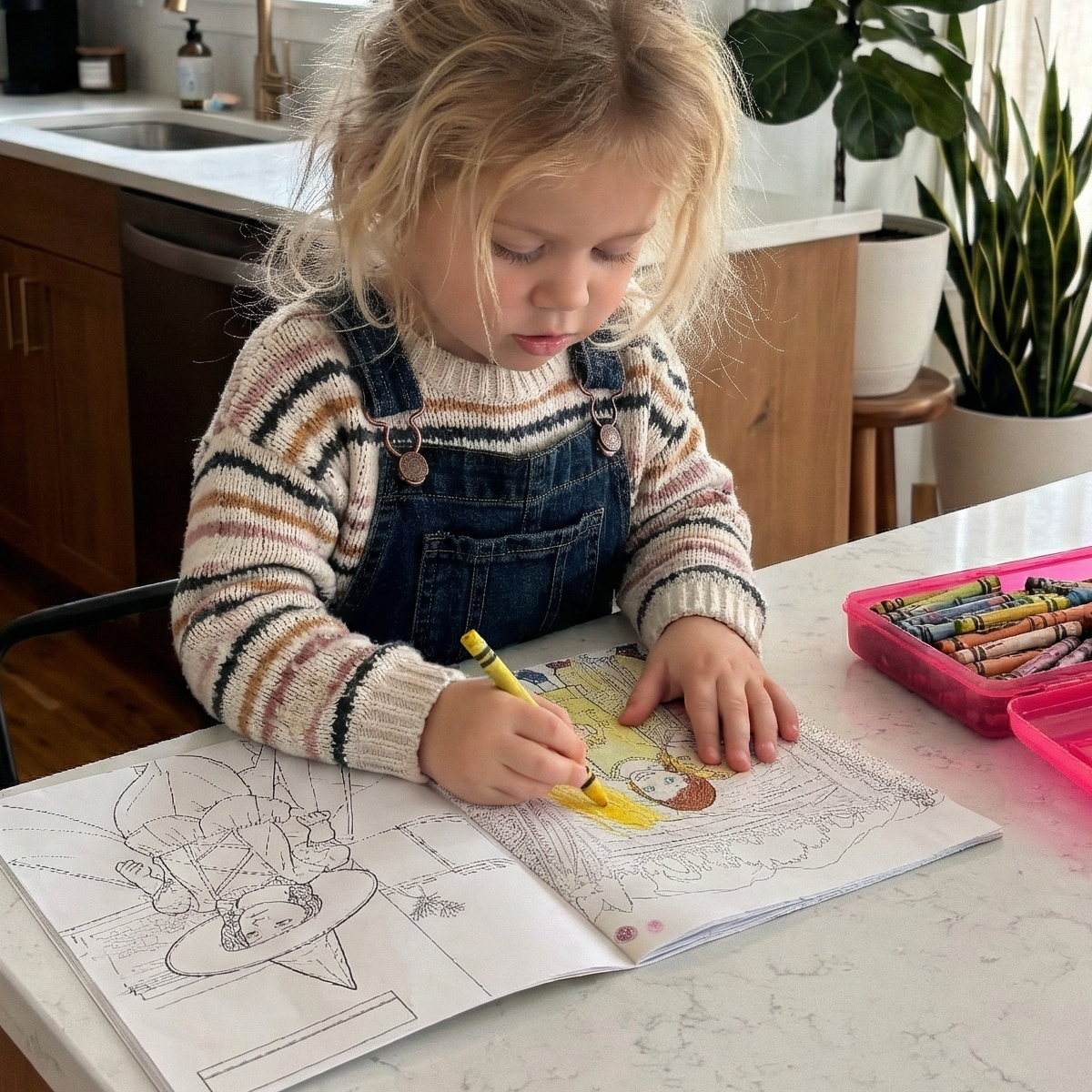
Memory Doodle is a premium storytelling service that transforms your favorite family snapshots into beautiful, custom-bound coloring books....
- Instant Peace: Enjoy 30–60 minutes of quiet, screen-free focus while your child explores their creativity.
- The "Look, It’s Me!" Moment: Boost your child’s confidence by making them the hero of their very own book.
- Meaningful Gifting: Easily share the joy with your inner circle using our simple digital gift codes.
Frequently Asked Questions
What if I don't have time for hobbies?
How do I choose which calming hobby to start with?
Can hobbies really replace the dopamine hit of social media?
What if I start a hobby and don't stick with it?