

- The Mechanism Fast cuts and reward loops in screens keep kids' bodies in low-grade fight-or-flight mode, even when they look calm.
- The Fix Hands-on creative play activates the vagus nerve, the body's main calming pathway, through rhythmic motion and self-directed focus.
- The Multiplier Personal imagery — a child's own face or family photo — lowers mental effort and deepens the calming effect versus generic coloring pages.

Your kid seems totally zoned out in front of the tablet. Calm, even. Then you turn it off and — boom. Meltdown. That's not bad luck. It's biology. The stillness you're seeing on the outside has almost nothing to do with what's happening inside their nervous system.
Screens don't relax kids. They keep the body's alert system running, quietly, the whole time. Creative play does the opposite — it flips on the body's actual "rest and digest" switch. That's the difference this article is about.
Why Does "Unwinding" With Screens Leave Kids More Dysregulated?
Screens keep the nervous system in a low-grade state of alert because rapid scene cuts, loud sound design, and reward-based apps trigger repeated stress and dopamine responses. The child looks calm, but their body is working overtime — which is why meltdowns often hit right after the screen turns off.
Think about the shows your kid watches. Scene changes every 2-3 seconds. Sound effects that spike and drop. A new "reward" — a coin, a level, a laugh track — every few seconds. Each one of those is a tiny jolt to the nervous system. Individually they're nothing. Stacked hundreds of times over a 30-minute episode, they add up to sustained sympathetic activation — the same "fight or flight" branch of the nervous system that fires when we sense a threat.
Here's the part most parents miss: physical stillness is not the same thing as internal calm.
A kid sitting cross-legged staring at a screen looks like the picture of relaxation. But their heart rate, cortisol, and attention system are being pinged constantly. Researchers call this a kind of sensory overload masked by stillness — the body can't move to discharge the stress response, so it just... builds. When the screen goes off, that backlog has nowhere to go except out, usually as tears, yelling, or a full collapse on the kitchen floor.
That's the screen trance paradox. Quiet on the outside. Loud on the inside.
What's the Neurological Difference Between Consuming and Creating?

Consuming media means the brain is only reacting to fast external input, which keeps the stress-response system active. Creating something — drawing, building, coloring — means the brain initiates its own action, which activates the parasympathetic nervous system and lowers cortisol.
This is the real dividing line, and it's simpler than it sounds. When your child watches a screen, their brain is in reaction mode — process this image, catch that sound, track that motion, over and over, hundreds of times a minute. There's no pause button on the inside, even if there's one in your hand.
When your child draws, colors, or builds something with their hands, their brain switches to initiation mode. They decide what color goes where. They control the pace. That sense of agency — "I'm making this happen" — is what activates the vagus nerve, the body's main channel for calming things down after stress. The Cleveland Clinic notes that vagus nerve activation slows heart rate and supports the body's return to a resting state — exactly the opposite of what fast-cut media does.
There's also something happening at a purely physical level. The repetitive motion of a crayon moving across heavy paper — back and forth, back and forth — is rhythmic in a way that mirrors other proven calming behaviors, like rocking or deep breathing. Occupational therapists have long used repetitive, textured, hands-on tasks as a way to help kids self-regulate. The sound of a crayon on thick paper. The slight resistance of the page. The weight of the crayon in a small hand. None of that exists on a glass screen.
Generic coloring pages give kids some of this. But they don't give kids all of it.
Why Do Personal Identity and Storytelling Make Creative Play More Calming?
Familiar, personally relevant imagery lowers the mental effort needed to focus, which deepens the calming effect of creative play. Seeing themselves, their pet, or their family in the artwork gives kids a sense of emotional safety that a random coloring page can't provide.
Ask any preschool teacher: kids light up differently when they see something familiar. A generic dinosaur coloring page gets maybe five minutes of attention. A coloring page that's actually them — their own face, their own dog, their own grandma — gets a totally different reaction. Longer focus. Slower breathing. Fewer "I'm bored" complaints halfway through.
This isn't just anecdotal. Developmental psychologists have long noted that self-recognition and personal relevance reduce cognitive load — the brain doesn't have to work as hard to make sense of something familiar, so more of its resources go toward the calming, focused task at hand instead of processing something new. That's part of why bedtime stories about "you" work better than stories about strangers. The same idea applies to a coloring page.
This is exactly the gap a personalized coloring book is built to close — turning your own family photos into line art your child recognizes instantly, instead of handing them one more sheet of clip-art animals.
Memory Doodle Custom Coloring Book
"A basket or bin to keep supplies visible and ready"
Learn More →If you want a screen-free activity that actually holds attention for weeks instead of minutes, here's what to have on hand:
Skip photos where your child is mid-motion or far from the camera — close-up, well-lit faces convert into cleaner line art than busy action shots. Save the blurry, candid, mid-tantrum photos for the family album, not the coloring book.
How Do You Transition Your Child From Screen Trance to Calming Creation?

The safest transition uses a warm sensory bridge before the screen turns off, a ready-to-go quiet corner, a personally meaningful creative prompt, and a few minutes of coloring alongside your child. Skipping the bridge step is the most common reason screen-to-creation transitions fail.
Step 1: Build a Warm Sensory Bridge
Don't just yank the screen away. That's how you get nervous system whiplash. Give a two-minute warning, dim the lights a touch, maybe put on a familiar song. You're signaling to their body that a shift is coming, not ambushing it.
Step 2: Set Up a Low-Friction Quiet Corner
Have the materials already out — not buried in a drawer. A basket with crayons, a stack of pages, good light. If your kid has to go hunting for supplies, you've already lost the moment.
Step 3: Use a High-Interest, Personal Prompt
This is where a personalized coloring book earns its keep. A blank page asks too much of a dysregulated kid. A page with their own face on it asks nothing — recognition does the work instantly.
Step 4: Co-Regulate for 3 Minutes
Sit down next to them. Color your own page. You don't need to talk. Your calm nervous system, sitting right there, is doing more regulating work than any instruction you could give.
Three minutes is often all it takes.
For more on breaking the daily screen battle specifically, this guide on reducing screen time and replacing daily battles with peace walks through the bigger picture, and this one on surviving the 5 PM witching hour is worth a read if that's your hardest hour of the day.
Let's compare what's actually available to parents trying to make this switch.
| Feature | Memory Doodle Coloring Book | Generic Coloring Book | Free Printable Pages |
|---|---|---|---|
| Personal recognition (child's own face/family) | Yes — made from your own photos | No — generic characters or animals | No — random clip art |
| Cost | Paid, one-time purchase | Low cost, widely available | Free |
| Paper quality for repeated use | Heavy, artist-grade, lay-flat binding | Varies, often thin newsprint | Home printer paper, thin |
| Ready to use in the next 10 minutes | No — takes time to order and ship | Yes — grab off the shelf | Yes — print immediately |
| Attention span held | Long — kids return to it over weeks | Short — a few minutes | Short — a few minutes |
None of these options is wrong. But not all of them will hold a dysregulated 5-year-old's attention past minute four.
Here's an honest look at where a personalized coloring book actually falls short, too.
- Turns rhythmic, repetitive coloring motion into a genuine calming ritual
- Personal recognition deepens focus far beyond generic pages
- Heavy paper and lay-flat binding hold up to years of use
- Comes with gifting codes that create extra connection moments
- Ships in a few business days, so it's not an instant fix for tonight's meltdown
- Close-up, well-lit photos convert best — busy group shots don't translate as cleanly into line art
Frequently Asked Questions About Screen Overload and Nervous System Regulation
How Can Families Reclaim Peace Through Tactile, Creative Play?
The shift from screen consumption to hands-on creation isn't about banning tablets forever. It's about giving your child's nervous system a real off-ramp — something with texture, rhythm, and their own face looking back at them from the page.
That's calming in a way a screen never will be.
One thing most parents don't try: let your child "gift" a coloring page to a grandparent or cousin before they even finish their own book. Memory Doodle includes digital codes for exactly this. Watching someone else's face light up over their artwork does more for a kid's sense of calm and connection than another twenty minutes of screen time ever could.
Ready to give your child's nervous system a real off-ramp from screens?
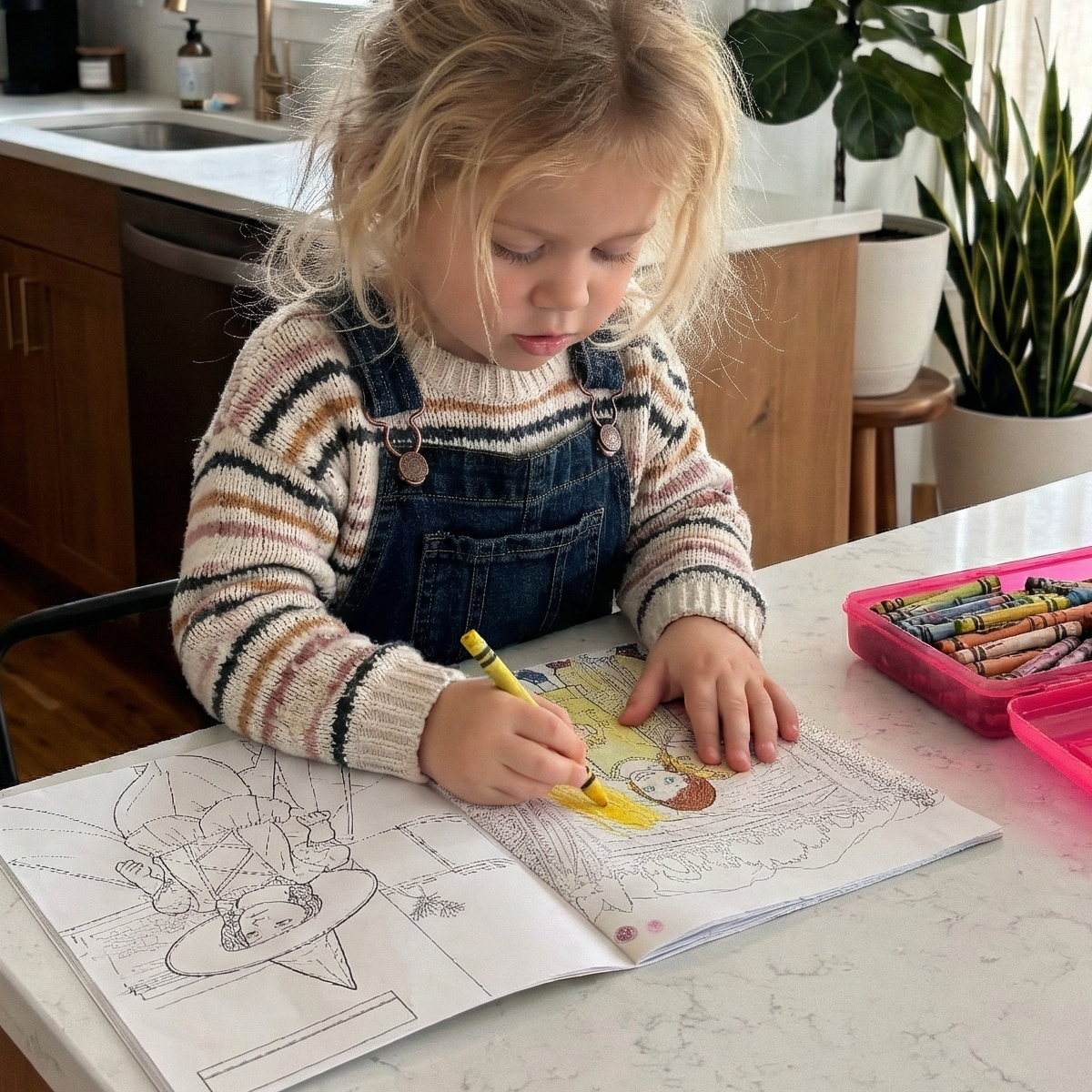
Memory Doodle is a premium storytelling service that transforms your favorite family snapshots into beautiful, custom-bound coloring books....
- Instant Peace: Enjoy 30–60 minutes of quiet, screen-free focus while your child explores their creativity.
- The "Look, It’s Me!" Moment: Boost your child’s confidence by making them the hero of their very own book.
- Meaningful Gifting: Easily share the joy with your inner circle using our simple digital gift codes.