

- Why FaceTime Falls Short Young kids bond through shared activity, not face-to-face conversation, so open-ended video chats put too much pressure on little ones and leave grandparents feeling like strangers.
- The Fix Is Parallel Play Doing the same simple activity side-by-side over video, like coloring, removes the performance pressure and lets conversation happen naturally in the gaps.
- Matching Pages Matter The ritual works best when both grandparent and grandchild color the exact same picture at the exact same time, ideally one made from a real family photo.

Why Do Video Calls With Long-Distance Grandkids Feel So Awkward?
Video calls feel awkward because they force eye contact and constant talking, which is not how young kids naturally connect. Kids under 8 bond best through shared activity, not conversation, so a call with nothing to "do" quickly turns into a staring contest.
You dial in, your grandchild's face fills the screen, and then... nothing. She waves once, says "hi Grandma," and wanders off to find a toy. You're left talking to a countertop.
It's not that she doesn't love you.
Kids process a screen face very differently than a real one. There's no smell, no touch, no shared space to move through together. A call built entirely around "so, tell me about your day" puts a 5-year-old in the position of an adult being interviewed. Most 5-year-olds don't have the language skills or patience for that format. So they squirm, give one-word answers, or bolt.
Compare that to sitting next to a grandchild at the kitchen table while she's doing a puzzle. You don't have to make conversation happen. It happens on its own, in bursts, while both of you focus on the puzzle in front of you. That's the piece FaceTime is missing.
Why Does It Feel So Heartbreaking to Feel Like a Virtual Stranger?
It hurts because you're missing the small, ordinary moments that build real familiarity, like bath time giggles or a scraped knee, and those gaps compound over months into a grandchild who treats you more like a nice acquaintance than family.
You want the hugs. You want the sticky hand grabbing yours. Instead, you get a pixelated wave and a call that lasts four minutes before someone gets bored.
That's not a small loss. Grandparents who live far away often worry, quietly, that their grandchild won't really know them the way a grandchild who lives ten minutes away does. And missed milestones add up. You weren't there for the first steps, the first day of school, the tooth that came out at dinner. Every call becomes another data point in a running tally of "moments I wasn't part of."
The pressure to make every single call count only makes it worse. You go in wanting a meaningful conversation, and a meaningful conversation is exactly what a 4-year-old cannot deliver on command. So the call ends feeling hollow for both of you, and you hang up wondering if you're doing something wrong.
You're not. You just need a different format.
What's the Best Way to Bond With Grandkids Over Video Calls?
Shift from conversation to "parallel play" — doing the same simple activity side-by-side over video, like coloring, building blocks, or drawing. Child development research shows young kids bond through shared activity long before they're skilled at reciprocal conversation.
Parallel play is a real term in child development — it describes how toddlers and young children play near each other, engaged in the same activity, without needing to interact directly the whole time. The concept was first described by researcher Mildred Parten in the 1930s, and it still holds up. Kids as old as 7 or 8 relax into activities more easily when they're not required to make eye contact or hold up their end of a conversation.
Bring that same idea to a video call, and the whole dynamic changes. Instead of a grandchild performing for the camera, she's just coloring, same as you. The pressure disappears. Conversation happens naturally, in the gaps between crayon strokes, instead of being forced.
This is the real reason coloring together works better than "tell me about school." Nobody's on the spot. You're both just doing a thing, together, at the same time, in two different states.
Skip pages with tiny background details for a first try — close-up faces and simple scenes convert best into clean line art. Save the busy group photos for book two, once you know your grandchild enjoys the ritual.
How Do You Set Up a "Coloring Across the Miles" Ritual?

Prop your phone or tablet on a stand angled down at your table, not at your face. Send matching coloring pages to both households ahead of time, pick a 15-20 minute window once or twice a week, and keep the goal low: color together, not finish a page.
Here's how to actually make this happen without overthinking it.
Step 1: Point the Camera at the Work, Not Your Face
A cheap phone stand or a stack of books does the trick. Angle the camera down so your grandchild can see your hands moving on the page, not just your chin. This one change makes the whole call feel like you're sitting across the table instead of on a screen.
Step 2: Get Matching Pages to Both Houses
This only works if you're both coloring the exact same picture. Mail printed pages ahead of time, or email a PDF the parents can print. Either way, you both need the same image in front of you before the call starts.
Step 3: Keep It Short and Low-Pressure
Fifteen to twenty minutes is the sweet spot. Nobody has to finish the page. If your grandchild wanders off after ten minutes, that's fine — you got ten good minutes of side-by-side time, which beats four minutes of forced conversation every time.
Step 4: Use Prompts, Not Questions
Skip "how was school." Try "I'm making Grandpa's shirt blue, what color are you doing?" Prompts about the page itself invite easy answers. Questions about the day invite shrugs.
If you want a ritual that gets used for months instead of one awkward Tuesday, here's what you actually need on hand:
What You'll Need
- A simple phone or tablet stand — even a stack of cookbooks works, as long as the camera points at the table
- Two identical sets of coloring pages — one mailed or printed for each household
- A basic box of crayons or colored pencils on both ends — matching colors aren't necessary, but having enough options helps the conversation ("what color are you using for the sky?")
Generic printable coloring pages work fine for this — you can find plenty free online, and there's no shame in starting there while you test the ritual out.
But a picture of a random dinosaur only goes so far in sparking conversation.
Before you order
You need about five photos, not fifty.
Close-up faces with decent light turn out best. They do not need to be recent, and they do not need to be good. A screenshot from the family group chat works fine.
Nothing is a surprise.
You see what each photo became before you pay for anything, so a photo that did not work is something you find out now rather than when the book arrives.
Allow five to seven business days.
Each book is made to order, then printed and bound. Worth knowing if you are shopping close to a birthday.
$24.95 for the first book, $10 for each one after.
Flat $5.95 shipping on any order, however many books are in it.
How Can Memory Doodle Help You Color Your Shared Story Together?
Memory Doodle turns your own family photos into a custom coloring book, so instead of coloring a stranger's cartoon, your grandchild is coloring a picture of the actual beach trip, the actual dog, or the actual afternoon you spent together last summer.
This is where the "coloring across the miles" idea gets its real power. A generic coloring page gives you something to do together. A page made from your own photo gives you something to talk about.
Picture this: you order two copies of the same personalized coloring book — one for you, one shipped to your grandchild's house. One page shows last Christmas, when she fell asleep under the tree in her reindeer pajamas. Another shows the family dog, mid-jump, catching a tennis ball. You're not coloring a stranger's drawing anymore. You're coloring your own memories, together, from two different kitchens.
That's a very different kind of quiet. It's the sound of two crayons moving at once, and a grandchild saying, "Remember when Buddy stole my sandwich?" — because she's looking right at the photo turned into line art.
Memory Doodle uses your own photos — the messy, real, flour-covered-face kind of photos — and turns them into clean, hand-sketched-feel line art on heavy, artist-grade paper with a lay-flat binding, so it holds up to real crayon pressure and doesn't fall apart after a few sessions. It's built to be an heirloom, not a throwaway activity book. Every order also comes with digital codes you can use to gift free coloring pages to other family members, which makes it easy to get siblings or cousins doing the same ritual too.
One honest note: it takes about 5-7 business days to print and ship, so it's not something you order the morning of a call. Plan a week ahead if you want it ready for a specific visit or birthday.
If you're looking for other ways to build this kind of connection, our guide on quiet grandparent bonding activities for low-energy days has more ideas that don't require a lot of setup.
Let's look at how this stacks up against your other options.
| Feature | Memory Doodle | Generic Printable Pages | Standard FaceTime Chat |
|---|---|---|---|
| Personal connection to the images | High — pages come from real family photos | None — random cartoon characters | N/A, no shared object at all |
| Cost | One-time purchase, ships to two addresses | Free | Free |
| Conversation prompts built in | Strong — kids narrate the memory unprompted | Weak — no personal story attached | None — relies on open-ended questions |
| Setup time | 5-7 business days to print and ship | Instant, print at home | Instant, just dial in |
| Keepsake value over time | High — heavy paper, lay-flat binding built to last | Low — thin paper, easily torn | None — no physical object created |
What Are Some Creative Ways to Keep This Ritual Fresh?

Rotate in mailed pages with handwritten notes, pair coloring time with a read-aloud story, and start a "Grandma & Me" keepsake binder on both ends to collect finished pages over time.
Once the basic ritual is working, small variations keep it interesting.
Mail the Finished Pages Back and Forth
After a call, mail your colored page to your grandchild, and have her mail hers to you. Tuck in a sticker or a short note. Now there's a physical object traveling between two houses, which makes the whole thing feel less like a screen activity and more like a real correspondence.
Add a Story to the Mix
Some families color quietly while a parent reads a chapter aloud in the background, or Grandma reads a short story over the call while everyone colors. This works especially well for kids who find straight coloring a little slow — the story gives their ears something to do while their hands stay busy.
Start a Shared Binder
Keep a binder or box on each end labeled "Grandma & Me." Every finished page goes in. After a year, you've got a stack of pages that map an entire year of calls — which becomes its own kind of keepsake. For more ideas along these lines, take a look at 5 family heirloom gift ideas that strengthen family connections.
None of these ideas require much planning.
They just require showing up, once a week, with a crayon in hand.
Before you settle on this approach, here's an honest look at where it shines and where it doesn't.
- Gives grandparent and grandchild a real shared activity instead of forced conversation
- Turns real family memories into a lasting keepsake both households can keep
- Low-pressure format works even for kids with short attention spans
- Comes with free digital codes to share with other relatives
- Takes 5-7 business days to ship, so it's not a same-day fix for tonight's call
- Not every photo converts perfectly — close-up faces work better than busy group shots
Frequently Asked Questions About Bonding With Long-Distance Grandkids
One thing most families don't think to try: let your grandchild pick which photo becomes the very first page of the book. Kids who choose the memory themselves tend to talk about it three or four times more during the call than a page you picked for them.
Ready to turn video calls into real bonding time?
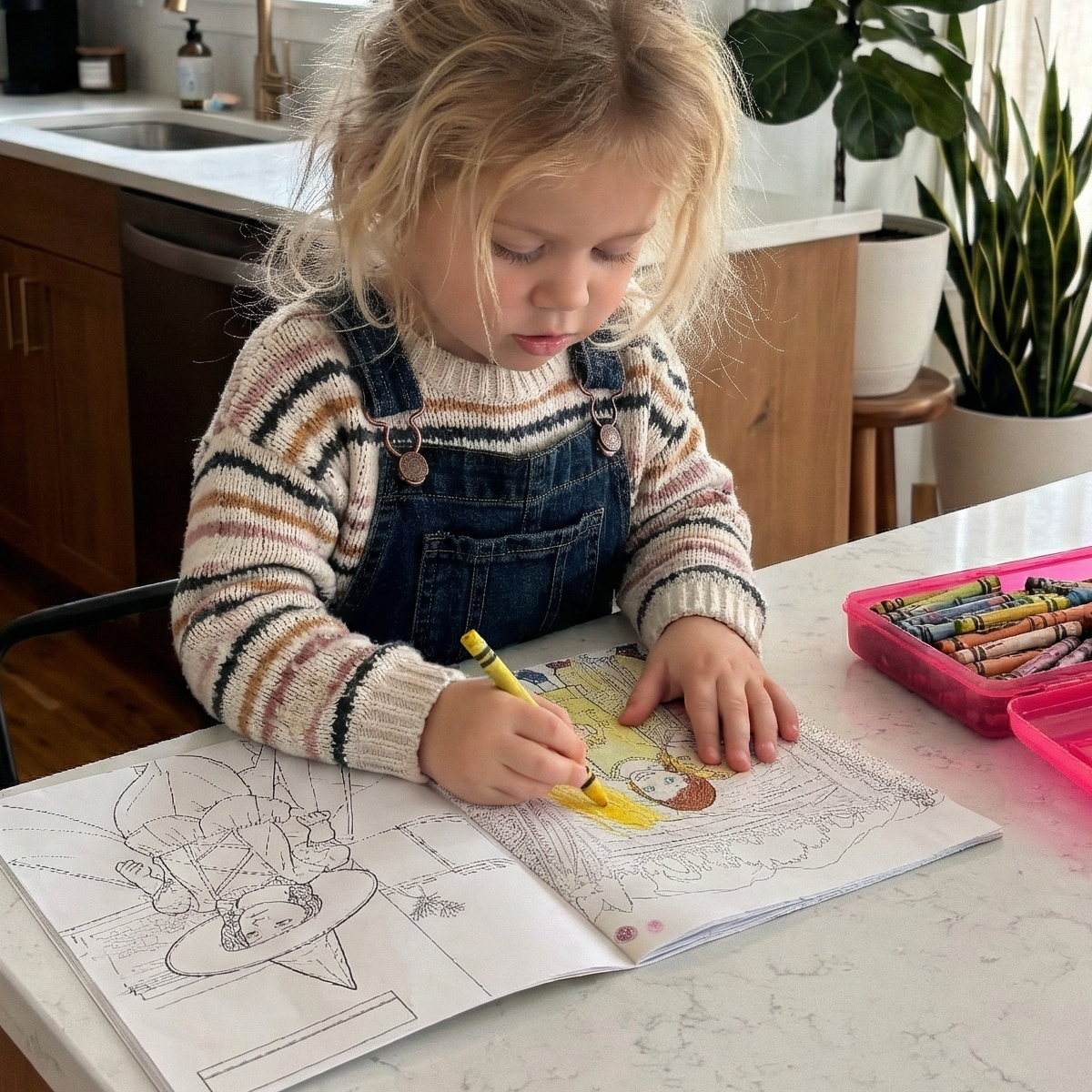
Memory Doodle is a premium storytelling service that transforms your favorite family snapshots into beautiful, custom-bound coloring books....
- Instant Peace: Enjoy 30–60 minutes of quiet, screen-free focus while your child explores their creativity.
- The "Look, It’s Me!" Moment: Boost your child’s confidence by making them the hero of their very own book.
- Meaningful Gifting: Easily share the joy with your inner circle using our simple digital gift codes.