

- Swap, don't just stop Taking the tablet without offering something immediately appealing is the main reason transitions turn into meltdowns — the handoff matters as much as the limit.
- The 10-minute warning works A visible timer and a calm environmental cue (dimmed lights, soft music) tells a child's nervous system that a change is coming, which cuts resistance significantly.
- Personalization changes the game Kids who see their own faces in a coloring book stay engaged three to five times longer than with generic books — the recognition moment is what holds their attention.

The fastest way to get kids off the tablet at 5 PM is to swap it — not just take it. Give kids something tactile and engaging before the screen goes away. Children between ages 3 and 8 experience a genuine neurological crash as the day winds down, and a tablet fills that gap. The secret isn't willpower. It's a better alternative already waiting.
Here's what to do about it — and why the usual approaches tend to backfire right when you're most exhausted.
Why Is 5 PM the Hardest Time to Get Kids Off the Tablet?
5 PM is hard because kids hit their lowest point of the day — tired, hungry, and overstimulated — exactly when you're at yours. The tablet isn't laziness. It's a coping mechanism that works a little too well, which is why removing it feels like defusing a bomb.
There's real neuroscience behind this. The American Academy of Pediatrics has noted that screens trigger rapid dopamine cycling in children's brains — short bursts of reward that make the screen feel necessary, not optional. By 5 PM, kids are running on fumes. Their blood sugar is dipping, their self-regulation is shot, and the tablet is doing the emotional heavy lifting that they simply can't manage themselves right now.
Taking it away cold feels like pulling a life vest off someone who's treading water.
That's not an exaggeration — it's just how their nervous systems work at this age. The meltdown you get when you say "time to turn it off" isn't defiance. It's a dysregulated kid desperately trying to hold it together, and failing.
Which is why the approach matters so much. A flat "no more tablet" — especially delivered with your own frazzled energy after a long day — almost always escalates. But a calm, predictable transition with something genuinely appealing waiting on the other side? That's a completely different conversation.
Cold turkey works for some families, especially if kids are under three. But for most children ages 4 to 8, the research suggests gradual transitions with clear, consistent cues work significantly better than abrupt removal. A 2019 study published in JAMA Pediatrics found that children whose screen time was reduced through substitution (replacing screens with another activity) showed fewer behavioral problems than those whose access was simply restricted.
The goal isn't punishment. It's a better handoff.
What Is the "Witching Hour Switch" — and How Do You Make It Work?

The Witching Hour Switch is a deliberate transition ritual that signals "screens are done" without a fight. It works by giving kids a 10-minute warning, a physical cue (like dimming lights or starting music), and an immediately available alternative that's already set up and waiting — so there's no gap between "off" and "engaged."
The gap is where meltdowns live. If you take the tablet and then spend three minutes looking for crayons while your kid stands there imploding, you've already lost. The transition has to be seamless — not because you're trying to trick anyone, but because kids this age genuinely can't self-direct in that window of emptiness.
Here's what a Witching Hour Switch actually looks like in practice:
- 10-minute warning. Use a visual timer — the Time Timer brand is popular with occupational therapists for a reason. Kids can see the time running out. It's not a surprise.
- A transition cue. Dim the overhead light and turn on a lamp. Put on calm instrumental music (Spotify's "Kids Classical" playlist works). These environmental shifts tell the nervous system: something different is happening now.
- The handoff. Literally hand them something. A coloring book, a tray of kinetic sand, a puzzle. Physical contact with a new object is surprisingly powerful for breaking the screen trance.
Stay calm yourself — this part is harder than it sounds. Kids mirror your energy at this hour. If you're tense about the transition, they'll be tense. If you're matter-of-fact and warm about it, they follow your lead faster than you'd expect.
Most parents set up the alternative activity after telling kids the tablet is done — and that's exactly backwards. The activity needs to be already open, already on the table, and ideally already partially started before you say a single word about screens. When kids walk into a room and see a coloring book open to a page with their own face on it, curiosity kicks in before resistance does. You've already won the transition before it starts.
What Activities Actually Replace the Tablet at 5 PM?
The best screen replacements for the 5 PM hour are low-demand, sensory-rich activities that don't require your supervision. Coloring, kinetic sand, simple puzzles, and play dough all fit this criteria — they absorb attention without requiring a child to perform or achieve anything.
The key word is "low-demand." At 5 PM, kids don't want a project. They don't want to make something impressive. They want to zone out in a healthy way — and that's actually fine. The screen was meeting a real need. The goal is to meet the same need differently.
Coloring specifically hits something that most activities miss: it's rhythmic. The back-and-forth motion of a crayon is genuinely calming to the nervous system. Occupational therapists call this "heavy work" — proprioceptive input that helps regulate a dysregulated child without them even knowing it's happening.
Plain coloring books work okay. But here's what changes everything.
When kids see themselves in the pictures — their own face, their dog, their birthday party last summer — they don't just color. They narrate. They ask questions. They show you pages. A five-year-old who would color a generic princess for eight minutes will color a picture of herself at the beach for forty.
That recognition moment — "Mommy, that's ME!" — is genuinely hard to replicate with a store-bought book. If you want an activity that holds attention through dinner, a custom coloring book made from your own family photos is the closest thing to a guaranteed win we've found. Memory Doodle turns your real snapshots into beautiful line art, printed on heavy paper that handles small fists and enthusiastic scribbling without bleeding through. Not every photo converts perfectly — close-up faces work best, and very dark or shadowy photos can lose detail — but when you choose the right shots, the result is something kids genuinely don't want to put down.
For more ideas beyond coloring, this list of 15 simple screen-free activities for 4-year-olds covers a solid range of options across different attention spans and energy levels.
Worth noting: you can absolutely find free printable coloring pages online. They're a genuine option and worth trying first. They just won't have your kid's face in them — and that difference in engagement is real.
| Feature | Memory Doodle | Generic Coloring Book | Free Printables | Screen Time |
|---|---|---|---|---|
| Child engagement time | 30–45 minutes average | 8–12 minutes average | 5–10 minutes average | 60+ minutes, hard to stop |
| Personalized to your child | Yes — uses your own family photos | No — generic characters | No — generic templates | Partially (algorithm-curated) |
| Cost | Paid — see pricing | Under $10 at any store | Free | Subscription or device cost |
| Calming effect on nervous system | High — rhythmic coloring with personal imagery | Moderate — rhythmic coloring | Moderate — rhythmic coloring | Low — dopamine spikes, hard to transition away |
| Works without your involvement | Yes — kids self-direct easily | Yes — mostly | Yes — if pre-printed | Yes — but escalates over time |
| Paper quality | Heavy artist-grade, no bleed-through | Thin — markers bleed | Standard printer paper — flimsy | N/A |
| Setup time for parent | Zero after arrival — grab and go | Zero | 5–10 mins printing | Zero |
How Do You Create a "Witching Hour Sanctuary" That Actually Gets Used?
A Witching Hour Sanctuary is a specific, low-tech corner of your home that's always set up, always accessible, and associated only with calm activities. It works because it removes the decision-making your child can't handle at 5 PM — everything they need is already there.
You don't need a dedicated room or a Pinterest-worthy setup. A basket in the corner of the living room works fine.
What matters is that it's consistent and it's theirs. Kids this age respond powerfully to ownership — "this is my calm corner" lands differently than "go do something quiet." Put together a small rotation of activities that feel special because they only come out at this hour. Novelty matters more than expense.
A few things worth including in the rotation:
- A set of good quality crayons or colored pencils (the cheap ones frustrate kids and make the activity feel punishing)
- A coloring book that gets refreshed occasionally — even just swapping pages keeps it feeling new
- One simple puzzle at an appropriate level, swapped out weekly
- Play dough or beeswax molding sticks, stored in a small container they can open themselves
Storing a personalized coloring book in this space specifically — something with your family's photos — makes the sanctuary feel more meaningful than a generic activity corner. Kids know the difference between a place that was set up for them and one that just has toys in it.
If you've got siblings sharing the space, custom art packs designed for siblings can reduce the "that's mine!" friction that tanks the whole calming ritual before it starts.
The sanctuary only works if it's ready before 5 PM. Set it up during nap time or in the morning. If you're scrambling to find supplies while the clock hits 5:01, the transition will fall apart every time.
What If My Child Refuses to Engage With Anything Else?
If your child refuses every alternative, the issue is usually one of three things: the transition cue isn't consistent yet, the alternative isn't genuinely appealing, or they need a few days of holding the boundary before their brain accepts the new pattern.
Consistency is the most underrated part of this. The Witching Hour Switch doesn't work on day one for most kids. It works on day six or seven, once the nervous system recognizes the pattern and stops fighting it. The first few days are the hardest, and that's normal — it doesn't mean the approach is wrong.
A few things that help when a child genuinely digs in:
Don't negotiate about the screen. Keep it brief and warm: "Tablet time is done. Let's find your coloring book." Repeat it like a broken record if needed, in the same calm tone. The more you explain or justify, the more they argue.
Check whether the alternative is actually compelling. A child who loves construction vehicles will not be soothed by fairy coloring pages. Match the activity to the kid, not to what you think a calm activity should look like.
And give it time. The 5 PM Survival Guide goes deeper on managing the escalation without losing your mind in the process — especially for the first week when everything feels like it's getting worse before it gets better.
It does get better. That part is genuinely true.
- Kids recognize themselves immediately and stay engaged far longer than with generic books
- Heavy paper holds up to toddler scribbling, markers, and enthusiastic small hands
- Lay-flat binding means even young kids can reach every corner of the page
- Doubles as a keepsake — something worth saving, not tossing after one use
- Gift codes included so grandparents and family can color the same memories remotely
- Takes 5–7 business days to ship, so it's not a last-minute or same-day option
- Not every photo converts well — very dark, blurry, or distant shots lose detail; close-up faces work best
One thing most parents don't realize: kids under four tend to scribble over everything rather than color carefully inside the lines, and that's completely fine. The thick paper in quality coloring books handles it without bleeding through, which means you're not chasing a crayon mark across three pages. Let them scribble. The point is the calm, not the artwork.
If you want to read more about building sustainable quiet time — not just at 5 PM but through the whole afternoon — this piece on getting 30 minutes of genuine quiet covers the full picture without requiring a nap from anyone.
Want something waiting at 5 PM that they'll actually reach for?
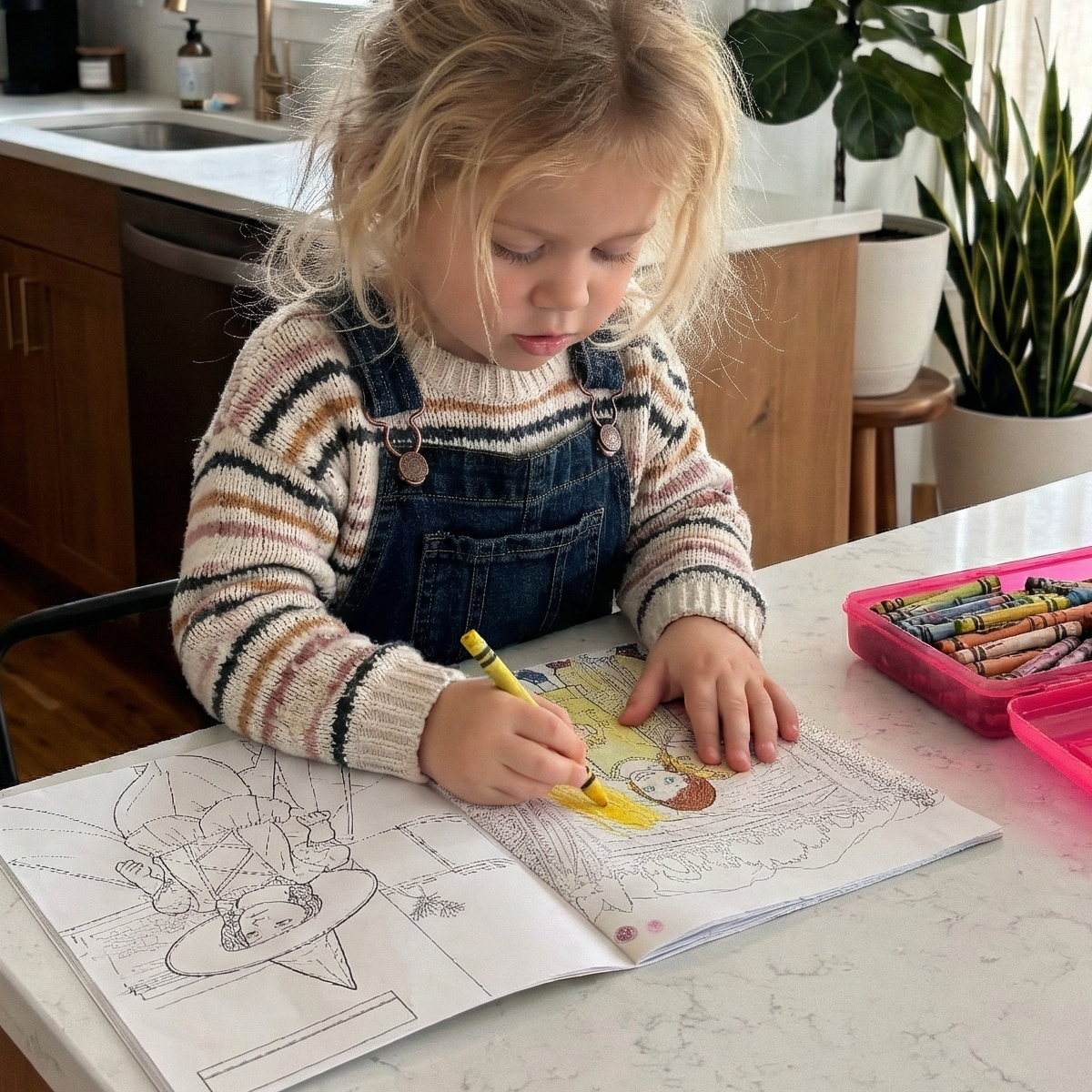
Memory Doodle is a premium storytelling service that transforms your favorite family snapshots into beautiful, custom-bound coloring books....
- Instant Peace: Enjoy 30–60 minutes of quiet, screen-free focus while your child explores their creativity.
- The "Look, It’s Me!" Moment: Boost your child’s confidence by making them the hero of their very own book.
- Meaningful Gifting: Easily share the joy with your inner circle using our simple digital gift codes.
Frequently Asked Questions
What is the 3-6-9-12 rule for kids and screens?
Is going cold turkey on the tablet at 5 PM realistic?
How do I get my child to actually stay with a non-screen activity?
How do I manage the noise while I'm trying to cook dinner?