

- Custom Coloring Books Turn family photos into line art kids can color themselves — they recognize their own faces and stay engaged for weeks.
- Experience Memberships Zoo and museum passes create year-round traditions and eliminate the one-time-visit pressure that exhausts families.
- Together Time Vouchers Handmade coupons for specific activities cost almost nothing but deliver memory value that lasts for decades.
- Books with Inscriptions The same person giving a book every birthday with a dated message creates an heirloom collection by age eighteen.

The average American child receives 70 new toys per year. By age ten, most kids have accumulated over 200 toys — and parents report that their children play with fewer than 12 regularly. If you're reading this, you're probably tired of watching thoughtful gifts disappear into closets or break within days.
These seven non-toy gift ideas solve the clutter problem while creating something better: memories that stick. You'll find options for every budget and relationship, from free DIY vouchers to investments that grow over decades. Some are perfect for grandparents who live miles away. Others work beautifully for the parent who swears they "don't need anything else."
Each idea focuses on connection time, not shelf space. Let's get into it.
1. Turn Family Photos Into Custom Coloring Books Kids Actually Recognize
A custom coloring book made from your own family photos transforms real memories into interactive art that kids can color themselves. Children immediately recognize their own faces, which keeps them engaged for hours — not minutes.
This is the gift that makes kids say, "That's ME!" the second they open it.
Generic coloring books from the store work fine for a rainy afternoon. But they get tossed in a drawer after two pages. A custom book with Grandma's house, the family dog, last summer's beach trip? That's different. Kids return to it again and again because they're coloring their own story.
The process is simple: you upload your favorite family snapshots — the messy ones with flour on faces, the candid backyard moments, the holiday chaos — and those photos get transformed into clean, beautiful line art. You preview every page before ordering. The book arrives printed on thick, artist-grade paper with lay-flat binding that makes it easy for little hands to color without fighting the spine.
Memory Doodle Custom Coloring Book
"Your favorite family photos (close-ups work best)"
Learn More →What makes this work so well as a gift? It's personal without being precious. Kids actually use it. Parents report that children as young as three will sit quietly for 30-45 minutes at a time, which in parenting time feels like a vacation. Older kids (7-10) get genuinely excited about the artistic challenge of matching colors to their real-life memories.
The heirloom factor matters here, too. This isn't something you throw away when the crayons run out. Families save these books for decades. One grandmother told us she orders a new book every year for each grandchild — same process, new photos — and they've become a tradition her grandkids expect and treasure.
For long-distance grandparents, this is the "stay present from miles away" gift. Your grandchild colors a picture of the two of you together. That's connection you can't get from a stuffed animal.
The one downside: you need 5-7 business days for shipping, so it's not a last-minute gift. And not every photo converts perfectly — close-up faces work best. Blurry or dark photos won't give you the clean line art you're hoping for.
But if you're looking for a personalized keepsake gift that becomes a family heirloom, this one delivers. It checks every box: screen-free, calming, personal, and designed to be kept.
2. Give Museum Memberships and Zoo Passes That Build Year-Round Traditions
Annual memberships to museums, zoos, or aquariums create year-round opportunities for quality family time without adding physical clutter. Many memberships include reciprocal benefits at other institutions, which makes them valuable for families who travel.
Here's what makes experience memberships work: they remove the barrier of "is this worth the entrance fee?" Families with memberships go more often — sometimes just for an hour on a Saturday morning. They're not trying to squeeze every exhibit into one exhausting visit. They can leave when the toddler melts down and come back next week.
That repeat-visit factor is where the memory-building happens. Kids develop favorite exhibits. They notice when the zoo adds a new animal or when the science museum rotates a display. They start saying things like, "Can we go see the penguins again?" These aren't one-off outings — they're ongoing traditions.
The educational value is real, but it doesn't feel like school. A six-year-old learning about habitats because she's obsessed with the rainforest exhibit? That's curiosity-driven learning, which sticks in ways that worksheets never do.
For gift-givers, memberships also solve the "what do I get them?" problem for the next year. You've given 12 months of outings, which means you've essentially given a dozen gifts in one. Grandparents especially love this because they can join on visits and be part of the experience.
One practical note: check if the membership includes guest passes or discounted tickets for friends. Some do, which makes playdates easier. Also ask about parking fees — some institutions charge separately, and that can add up if the family visits monthly.
The only real con: if the family lives far from the museum or zoo (more than 30 minutes), they probably won't use it as often. Geography matters here. Choose an institution they can reach easily on a weekday afternoon, not just on special-occasion Saturdays.
If you're ordering a custom coloring book, include at least three photos where the child is doing something active — climbing, jumping, playing — not just posed portraits. Kids love coloring action scenes of themselves because they remember the moment and get to relive it with every crayon stroke. One mom told us her son spent 20 minutes coloring the grass around a photo of himself running through the yard, narrating the whole memory out loud as he worked.
3. Subscribe Them to Monthly Hands-On Learning Boxes (Then Watch Them Wait by the Mailbox)
Monthly subscription boxes deliver science experiments, art projects, or cooking kits that create anticipation and hands-on learning all year. The materials are consumed through the activity, so there's no long-term storage burden.
The genius of subscription boxes is the ritual they create. Kids know that the first Tuesday of the month is "science box day." They check the mailbox. They rip open the package. They immediately want to start the project.
That anticipation is part of the gift.
There are subscription boxes for every interest now: KiwiCo for STEM projects, Kidstir for cooking, Atlas Crate for world geography, Pipsticks for art and stickers. Most come with all the materials you need — no last-minute trips to the craft store for glue sticks or batteries.
Parents love these because they encourage collaboration without requiring a ton of parental prep. You're not Googling "easy science experiments" at 4 p.m. on a rainy Sunday. The activity arrives, the instructions are clear, and you spend an hour building a catapult or baking mini quiches together. That's quality time without the planning burden.
One unexpected benefit: these boxes work beautifully for kids who don't share toys well. The project is temporary. You build it, you launch marshmallows across the kitchen, you admire it for a week, and then it's okay to recycle it. There's no "that's mine forever" attachment, which reduces sibling conflict.
The downside? Subscription boxes can range from $20-$40 per month, so a year-long subscription is a $240-$480 commitment. That's more than most people spend on a single birthday gift. If that feels steep, consider gifting three or six months instead of a full year.
Also, some kids lose interest after a few months. If you're buying for a child you don't see often, ask the parents first which topics the kid is genuinely into. A geography box won't excite a child who's obsessed with dinosaurs.
4. Invest in Classes and Lessons That Build Skills and Confidence
Classes and lessons — swimming, music, art, dance, martial arts — gift a child with developing abilities and confidence rather than temporary entertainment. They create weekly rituals and result in tangible skills that kids remember for decades.
Here's the difference between a toy and a skill: the toy breaks or gets outgrown. The skill stays.
A child who learns to swim at six because Aunt Sarah paid for lessons? She'll remember that every time she jumps in a pool for the rest of her life. A kid who takes piano lessons and learns to play "Happy Birthday" at family gatherings? That becomes part of his identity.
Classes also create social connections that toys can't. Kids make friends with the other children in art class. They bond with instructors who encourage them through tough learning curves. They perform in recitals or showcases where extended family can attend and cheer. These are memory-building moments.
For parents, classes provide structure and routine — something to look forward to every Wednesday after school. For working parents especially, this is a gift of scheduled quality time built into the week.
The gift-giver benefit: you can attend performances or showcases. If you're a grandparent who paid for dance lessons, you get invited to the recital. You're not just funding an activity — you're creating an opportunity to be present for milestones.
One practical consideration: coordinate with parents first. If the child is already taking soccer, piano, and swimming, adding another class might be overwhelming rather than helpful. Also ask about the family's schedule — a Saturday morning class might be perfect, but a Thursday evening class might conflict with dinner routines.
And be realistic about the commitment. Most classes run for a full season or semester. If a child genuinely hates it after three sessions, parents shouldn't feel obligated to force them through 12 weeks. Build in an "out" conversation upfront.
5. Create 'Together Time' Vouchers: The Gift of Undivided Attention
Custom vouchers for specific experiences — ice cream dates, park adventures, baking sessions — cost almost nothing but deliver enormous memory value. They're especially powerful for long-distance relatives or busy working parents who want to gift intentional one-on-one time.
This is the gift that costs $5 and gets remembered for 20 years.
Here's how it works: you create handmade or printed vouchers for specific activities. Not vague promises like "we'll hang out sometime," but concrete plans: "This voucher is good for one trip to the ice cream shop, your choice of flavor." Or "This voucher is for one afternoon at the park, with kite-flying and no phones."
The specificity matters. Kids can picture exactly what they're getting. They can choose when to "redeem" the voucher, which gives them a sense of control and anticipation.
One grandmother we know makes a booklet of 12 vouchers every year — one for each month. January is hot chocolate and a library trip. June is berry-picking. October is pumpkin carving. Her grandkids plan their visits around which vouchers they want to use. That's 12 guaranteed memory-building moments.
For busy parents, this gift solves the guilt problem. You're not buying your way out of quality time — you're scheduling it in. The voucher becomes a commitment you've made public. Your child holds the physical reminder that you promised a baking day, and now you actually have to follow through. That accountability is a feature, not a bug.
You can theme vouchers to a child's interests: nature hikes for the outdoor kid, library trips for the bookworm, art museum visits for the budding artist. Or keep them simple: "This voucher is for one hour of whatever you want to do together, no questions asked."
The cost is nearly zero — some cardstock, a printer, maybe some stickers for decoration. But the memory value is huge. Kids don't remember the toys they got at age seven. They remember the time Uncle Mike took them to feed the ducks and let them throw all the bread.
One note: if you're a long-distance relative, be realistic about how often you can actually redeem these vouchers. Don't promise twelve visits if you only see the child twice a year. Create vouchers for FaceTime game nights or "mail a surprise" activities that you can actually deliver on.
6. Contribute to Savings, College Funds, or Investment Accounts
Contributing to a 529 college fund, custodial brokerage account, or high-yield savings account is the most practical non-toy gift that grows in value over time. Pair it with a small tangible item — like a certificate or a book about money — so kids have something to open and understand.
Let's be honest: this gift excites parents way more than kids.
But that doesn't mean it's not valuable. Parents who are already overwhelmed with stuff genuinely appreciate money that goes toward their child's future. A $100 contribution to a 529 account might become $200 by the time the child starts college. That's a gift that compounds.
The challenge is making it feel special in the moment. A five-year-old doesn't care about compound interest. So pair the financial gift with something tangible the child can hold: a certificate you design yourself explaining that money is growing for their future, a piggy bank they can use for their own savings, or a kids' book about money and how it works.
Some families use a visual approach: a chart that shows how the account is growing, updated every birthday. Older kids (8+) can start understanding the concept that Grandma's $50 gift is now worth $63 because it's been invested. That's an early financial literacy lesson wrapped in a gift.
According to a 529 plan, contributions grow tax-free when used for education expenses. For families serious about college savings, this is the gift that actually makes a dent in tuition.
The downside: it requires coordination with parents. You can't just surprise them with a $500 deposit into an account that doesn't exist. You need account details, and you need to make sure you're contributing to the right type of account for the family's tax situation. This is not a last-minute gift you can wrap up on your way to the party.
Also, be clear about your expectations. Is this money strictly for college, or can it be used for trade school, a gap-year program, or a first-car down payment? Have that conversation upfront so there's no awkwardness 15 years from now.
| Feature | Custom Photo Book | Store-Bought Coloring Book | DIY Printed Photos |
|---|---|---|---|
| Personal Recognition | Child sees their own face and family | Generic characters | Photos are for looking, not interacting |
| Engagement Time | 30-45 minutes per session, used for weeks | One afternoon, then forgotten | Glanced at briefly |
| Upfront Cost | $30-50 for full book | $5-8 | Free or cost of printing |
| Heirloom Quality | Thick paper, lay-flat binding, designed to keep | Thin paper tears easily | Standard photo paper fades over time |
| Immediate Availability | 5-7 business days shipping | Buy today, use today | Print at home instantly |
| Screen-Free Activity | Yes, fully interactive | Yes | No interaction, just viewing |
7. Give Books with Handwritten Inscriptions That Become Heirlooms

Books with personalized inscriptions on the inside cover create emotional connections that last for decades. When the same person gives a book every birthday with a dated message, it becomes a tradition the child treasures into adulthood.
Yes, books are technically physical items. But they're consumable through reading, they take up minimal shelf space, and the best ones get passed down or donated when outgrown. They're not clutter in the same way that a battery-operated singing turtle is clutter.
The real gift here isn't the book itself — it's the handwritten inscription on the inside cover. That's where the memory lives.
One family tradition we've seen: a grandmother gives a book every birthday and writes a message on the inside cover that includes the date, the child's current age, and one specific thing she loves about the child that year. By age eighteen, the child has a shelf full of books and eighteen handwritten notes documenting how their grandmother saw them grow. That's an heirloom.
Choose books that align with family values, inside jokes, or the child's current obsessions. A book about trains for a kid who's deep in a Thomas phase? Perfect. A book about a brave girl for a shy child who's learning to speak up? That's a message wrapped in a story.
Books also create opportunities for connection time. If you're giving the book in person, offer to read it together. If you're long-distance, record yourself reading the book aloud and send the audio file along with the physical book. Now the child can hear your voice reading the story even when you're not there.
For parents trying to reduce toy clutter, books are almost always welcome. They support literacy, they don't make noise, and they don't require batteries. Even families who are strict about "no more toys" will usually accept books.
One note: avoid books that are too young or too old for the child's current reading level. A beautiful picture book is wasted on a ten-year-old who's reading chapter books. If you're not sure what level the child is at, ask the parents or include a gift receipt so they can exchange it.
And please, write in pen, not pencil. You want that inscription to last for decades.
- Creates lasting memories and screen-free quality time without adding to toy clutter
- Works for every age and budget, from free DIY vouchers to year-long memberships
- Helps long-distance relatives stay meaningfully connected to grandchildren
- Builds skills, traditions, and family history instead of temporary entertainment
- Parents genuinely appreciate these gifts and remember who gave them
- Kids may initially seem less excited unwrapping an experience than a toy
- Some options like classes and memberships require coordination with parents beforehand
Building History, Not Clutter
The gifts kids remember aren't the ones that came in the biggest box. They're the ones that created a moment, taught them something, or made them feel seen. A custom coloring book where they're the main character. The summer they learned to swim. The monthly ritual of opening the science box together.
You don't have to eliminate all toys. But you can be intentional about what you give and why. The goal is to build family history — the kind of memories that get talked about at Thanksgiving 15 years from now.
Start with one non-toy gift this year and watch what happens. You might be surprised by which gifts actually get used, remembered, and treasured.
If you're looking for more ideas, check out these unique personalized gifts for kids that foster a deep sense of belonging — or explore screen-free activities that build connection without adding to the toy pile.
Ready to Give a Gift That Gets Used for Weeks, Not Minutes?
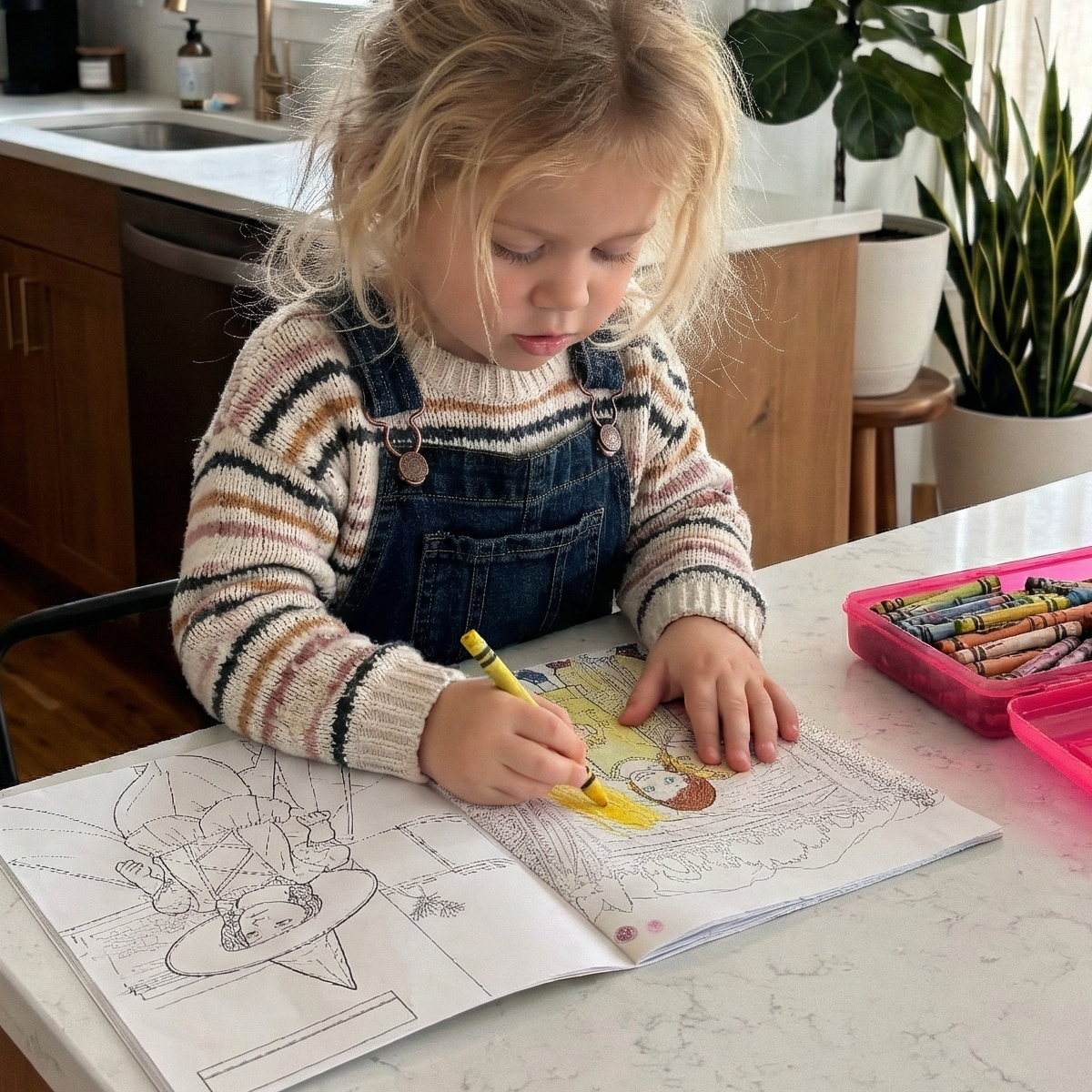
Memory Doodle is a premium storytelling service that transforms your favorite family snapshots into beautiful, custom-bound coloring books....
- Instant Peace: Enjoy 30–60 minutes of quiet, screen-free focus while your child explores their creativity.
- The "Look, It’s Me!" Moment: Boost your child’s confidence by making them the hero of their very own book.
- Meaningful Gifting: Easily share the joy with your inner circle using our simple digital gift codes.
Frequently Asked Questions
Will kids be disappointed without a physical toy to unwrap?
What age range works best for non-toy gifts?
How do I convince other family members to give non-toy gifts?
How can I make experience gifts feel special in the moment?