

- Cold turkey backfires Sudden tablet bans trigger a dopamine crash that looks like a tantrum but is closer to withdrawal.
- The fix is gradual A 4-phase protocol — audit, reduce, replace, then set zones — gives the brain time to adjust instead of shocking it.
- Replace before you remove Offline alternatives need to exist before the screen disappears, or your child just experiences loss.
- Personal beats generic Activities that feature the child themselves, like a custom coloring book, hold attention far longer than generic activity books.

That meltdown when you take the tablet away isn't bad behavior. It's a dopamine crash — the same kind of dip a slot machine player feels when the lights stop flashing. Fast-paced apps spike feel-good chemicals in a child's brain roughly every few seconds, and pulling the device away cold turkey asks their nervous system to land a plane with no runway.
Why Do Hard-Stop Screen Detoxes Trigger Tantrums and Tears?
Sudden tablet bans backfire because they remove a source of constant stimulation without giving the brain time to adjust, triggering a stress response that looks like defiance but is closer to withdrawal. The fix isn't willpower — it's a slower off-ramp.
Picture your kid mid-episode, mid-level, mid-scroll. You say "time's up," and the screen goes black. To an adult, that's a two-second inconvenience. To a child's brain, it's an abrupt stop after minutes of rapid-fire visual rewards — quick cuts, bright colors, instant feedback loops. The American Academy of Pediatrics has long noted that fast-paced media can overstimulate young viewers, and stopping it abruptly doesn't calm that stimulation down. It just leaves it with nowhere to go.
Then there's the convenience trap. You're making dinner, the baby's crying, and the tablet buys you fifteen quiet minutes. Nobody hands out medals for turning down that trade. But every time screens solve a short-term problem, they get baked in a little deeper as the default babysitter. That's not a parenting failure — it's just how habits form.
So the goal here isn't punishment. It's not "no more screens, ever," delivered like a verdict. It's a gradual, warm shift toward a home where quiet play feels just as good as a glowing screen — maybe better, because a parent is actually present for it.
How Does Tablet Overuse Disrupt a Child's Nervous System?
Fast-paced tablet content causes repeated dopamine spikes followed by crashes, which can leave kids irritable, overstimulated, and less able to focus on slower, self-directed tasks. Over time this pattern makes quiet activities feel unbearably boring by comparison.
Here's the mechanism nobody explains at pickup line small talk. Dopamine is the brain's "seeking" chemical — it rewards anticipation, not just pleasure. Apps and shows are built by teams whose entire job is triggering that seeking loop over and over: a new video, a new level, a new notification. A 2018 review in Frontiers in Psychology on digital media and child development noted that this reward-loop pacing trains the brain to expect rapid novelty — and slower, self-paced tasks start to feel unbearably dull by comparison.
That's why your kid can sit through a 90-minute movie but melts down after five minutes of a puzzle. It's not a character flaw. It's a mismatch between what their brain has been trained to expect and what a quiet task actually offers.
Watch for the tells: irritability the second a screen turns off, trouble sitting through a meal, glassy-eyed staring after even short sessions, or meltdowns over transitions that used to be easy. Those are signs of overstimulation, not defiance. Executive function — the brain's ability to plan, wait, and switch tasks — develops through slow, effortful play. Passive tapping and swiping doesn't ask the brain to do any of that work.
You've probably tried reducing screen time before and watched it slide right back within a week.
That's normal. It's also fixable — with a plan.
What Is the 4-Phase Gentle Screen Detox Protocol?
The 4-phase protocol moves from observation to gradual reduction to offline replacement to permanent screen-free zones, giving kids time to adjust at each stage instead of facing an abrupt cutoff. Most families see calmer transitions within 10 to 14 days.
Phase 1: Audit and Prepare
Spend three days just watching — no changes yet. Note when your child asks for the tablet, how long they last before a meltdown if you say no, and which shows or apps trigger the worst comedowns. This isn't busywork. It tells you exactly where your battles will happen, so you can plan around them instead of getting ambushed.
Phase 2: Gradual Reduction
Cut screen time by 15-20 minutes every few days, not all at once. Use a visual timer — the kind with a shrinking red disc — so your child can see time running out instead of hearing it announced. Give a two-minute warning before every transition. "Two more minutes, then we're switching to blocks" works far better than a sudden "time's up."
Phase 3: Introduce Offline Alternatives First
Before you remove a device, put something genuinely interesting in its place. This is the step most families skip, and it's why so many detoxes stall out. If the "instead of" only shows up after the screen disappears, your kid experiences it as loss, not upgrade.
Phase 4: Screen-Free Zones
Pick two or three non-negotiables — mealtimes, bedrooms, the first thirty minutes after waking up — and hold them steady. Consistency here matters more than strictness anywhere else. Kids settle into rules that never move.
If you want a gift that gets used for weeks instead of minutes, here's what to look for.
What Belongs in a Screen-Free Toolkit for Quiet Play?

An effective screen-free toolkit includes open-ended physical materials, non-messy artist-grade supplies, and a dedicated quiet corner — three elements that let a child transition independently instead of needing constant parent direction.
Open-ended toys — building blocks, magnetic tiles, simple wooden figures — let a child direct the play instead of following a script a screen wrote for them. That's grounding in a way passive watching never is. Look for materials with no "right" outcome. A puzzle has an ending. A bin of loose parts doesn't, and that's the point.
Three specific items are worth having on hand before you start any detox:
- Beeswax crayons — thicker, easier for small hands to grip than standard crayons, and they don't snap under pressure the way cheap wax ones do.
- A lay-flat coloring book — spiral or stitch-bound so pages stay open without little hands fighting the spine, which matters more than it sounds like it would.
- A small sensory bin — dried rice, beans, or kinetic sand in a shallow container gives restless hands something to do while the brain settles.
Set up a "peace corner" — a small rug, a basket of these supplies, decent light. The goal is that your child can walk over and start on their own, without you narrating every step. That independence is what makes quiet play sustainable instead of another thing you have to manage.
Generic activity books work for a rainy afternoon. They don't hold a kid's attention for a month.
Why Do Custom Coloring Books Work Better Than Generic Activity Books?
Custom coloring books made from a child's own photos capture attention longer than generic activity books because kids recognize themselves in the art, which creates an emotional pull screens can't replicate. This recognition moment is what keeps them coloring for weeks instead of minutes.
Think about the last generic coloring book you bought. Your kid colored two pages and it disappeared into the car seat pocket. Compare that to handing them a book where the pages show them at the beach last summer, or grandma teaching them to bake. That's not a small difference — it's the whole reason it works.
Memory Doodle's custom coloring books turn your own family photos into line art your child colors in. The messy flour-covered face from Tuesday's baking disaster. The gap-toothed grin from the first day of kindergarten. Real moments, not stock clip-art of a generic kid on a generic bike.
The paper matters more than people expect. Memory Doodle prints on heavy, artist-grade paper with lay-flat binding, so a four-year-old's crayon doesn't bleed through and the book survives being dropped, sat on, and dragged to grandma's house. That's the difference between a keepsake and something that gets tossed after one use.
One honest note: not every photo converts perfectly into line art. Close-up faces with clear features work best — a blurry action shot from across the yard won't turn into a great coloring page. Memory Doodle lets you preview every page before you buy, so you're never guessing.
Occupational therapists often suggest coloring in short, low-pressure bursts rather than one long sitting — five to ten minutes, several times a day, builds the tactile-regulation habit faster than a single 45-minute session. If your child abandons the page after two minutes, that's still a win. The habit builds before the stamina does.
How Does Tactile Play Reset a Child's Dopamine and Restore Family Calm?

Occupational therapists point to tactile activities like coloring, drawing, and hands-on crafts as effective tools for lowering overstimulation because the slow, repetitive motion of crayon on paper helps regulate the nervous system in a way passive screen time cannot.
Occupational therapists have long used tactile, repetitive motion — coloring, kneading dough, sorting small objects — as a way to help overstimulated kids come back down to baseline. The physical feedback of pressing a crayon into paper gives the brain something concrete to focus on, unlike a screen that just keeps feeding it more.
There's also a quieter benefit that's easy to miss: this kind of coloring works for the parent too. Our related piece on why coloring helps with anxiety, and not just for kids, covers why so many moms end up coloring right alongside their child. Sitting down together, even for ten minutes, is co-regulation — your calm nervous system helps steady theirs.
Sound matters here too. The scratch of crayon on paper is rhythmic in a way that a tablet's tapping and dinging never is. Parents often tell us the house feels different during coloring time — quieter, slower, almost like the whole room exhales.
The silence itself is the reward.
If you're managing this across more than one kid, sibling squabbles over "my book" versus "your book" are real. We wrote a full breakdown on why custom activity sets for siblings work better than forcing them to share — worth a look if you've got more than one set of little hands reaching for the same crayons.
Here's how the common screen-time alternatives stack up against each other:
| Feature | Custom Coloring Book | Generic Activity Book | Free Printable Pages |
|---|---|---|---|
| Personal connection to child | High — features the child's own photos | None — generic characters | None — generic clip art |
| Cost | Paid, one-time purchase | Low cost, store-bought | Free |
| Paper quality | Heavy, artist-grade, lay-flat binding | Varies, often thin | Home printer paper, prone to bleed-through |
| Setup time | 5-7 business days to arrive | Available same day at any store | Instant, print at home |
| Keepsake value | High — designed to be saved for decades | Low — usually discarded | Low — printer paper degrades quickly |
None of these options are wrong. They just solve different problems.
Every solution here has a real place, and it's worth being honest about where each one falls short too.
- Kids recognize themselves in the art, which keeps them engaged far longer than generic books
- Heavy paper and lay-flat binding hold up to years of use and repeat coloring
- Comes with digital codes to gift free pages to grandparents or cousins
- Preview every page before ordering so there are no surprises
- Takes 5-7 business days to ship, so it's not a same-day or last-minute gift
- Close-up, clear photos convert best — distant or blurry action shots don't turn into clean line art
One more thing worth knowing before you commit: shipping on a custom coloring book usually takes 5-7 business days, since each one is made after you order. That means it's not the gift you grab the morning of a birthday party — plan for it a week out, and it lands as the moment, not an afterthought scrambled together last minute.
If you want more screen-alternative ideas beyond this one, our guide on five personalized coloring books as iPad alternatives rounds up other formats worth trying, and our deeper piece on replacing daily screen battles with peace walks through more of the reduction strategy in Phase 2.
Frequently Asked Questions About Screen Detox for Kids
Try this on week two: let your child help pick which photos go into their next coloring book. That small bit of ownership over the process — not just the coloring, but the choosing — tends to double how long they stick with quiet play, according to parents who've done it more than once.
Ready to trade screen time battles for quiet coloring time?
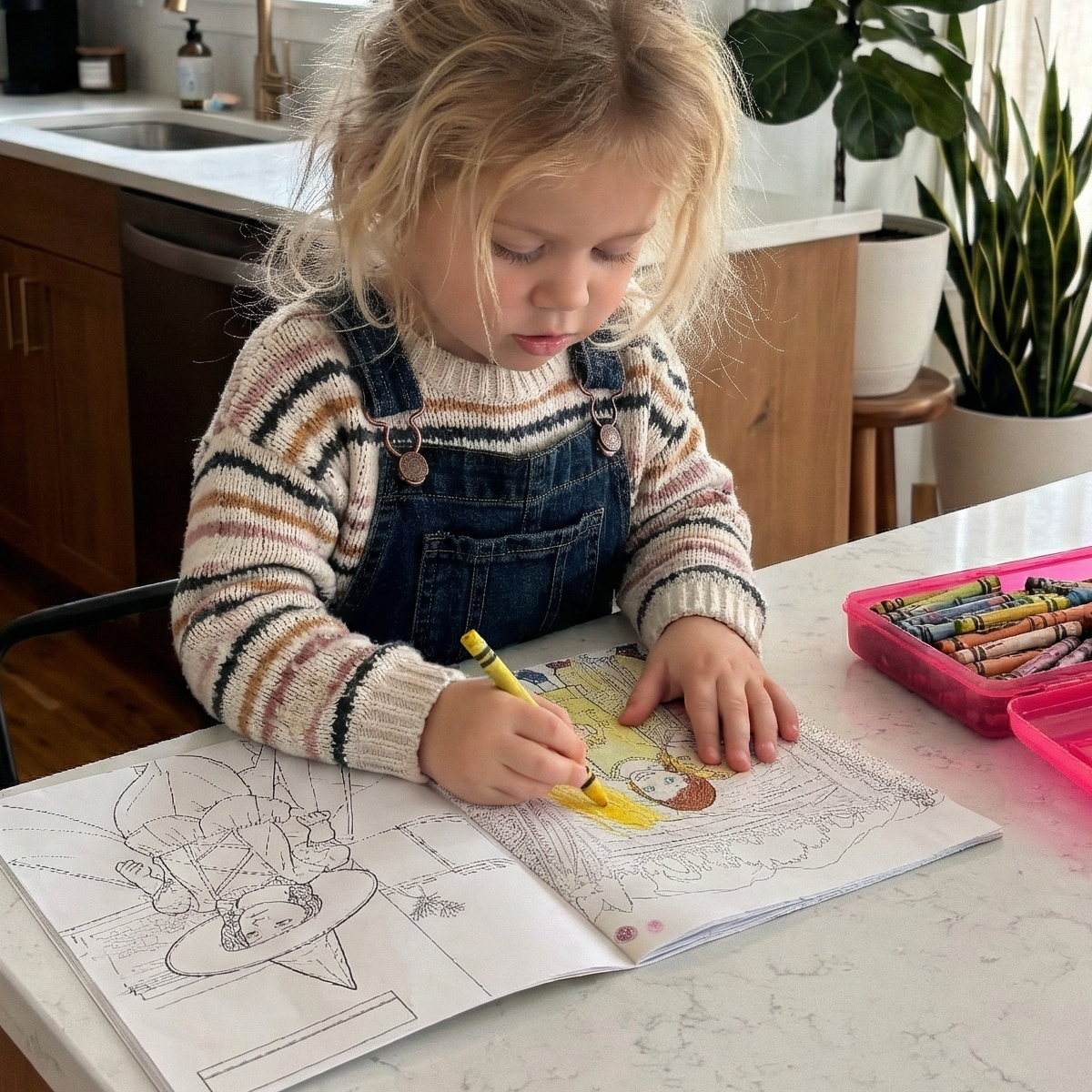
Memory Doodle is a premium storytelling service that transforms your favorite family snapshots into beautiful, custom-bound coloring books....
- Instant Peace: Enjoy 30–60 minutes of quiet, screen-free focus while your child explores their creativity.
- The "Look, It’s Me!" Moment: Boost your child’s confidence by making them the hero of their very own book.
- Meaningful Gifting: Easily share the joy with your inner circle using our simple digital gift codes.